

With the conference topic Looking back to move forward: sustainable consumption from Rio 92 to a post SDGs agenda, the speakers will take account of our progress, reflect on where we are, and set out a global future agenda of sustainable consumption.
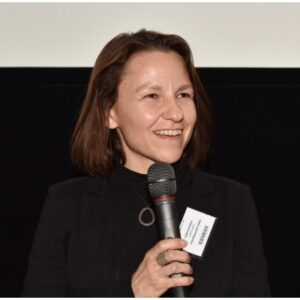
With a background in environmental management, sciences, policy and education, Edina is Research Director at GreenDependent Institute in Hungary. GreenDependent is a non-profit research and action organisation, with the mission to support and promote sustainable lifestyles while enabling multi-stakeholder discussion and collaboration.
Edina’s research focuses on sustainable lifestyles, social innovation and communities. She has a strong interest in connecting the environmental and social aspects of sustainability in all her work, most recently in European research projects on 1.5° lifestyles and energy citizenship. Edina has also been involved in action projects, multi-actor consultation and co-creation projects. Through these, she has supported households, communities and various organisation in becoming more sustainable through changing their behaviour, or, importantly, recognizing and preserving their already existing, often incidental, sustainable practices.
Edina’s publications include coediting books, e.g., Energy Citizenship Across Europe and Social Innovation and Sustainable Consumption. Research and Action for Societal Transformation, contributing book chapters, and papers, e.g., Preferences, enablers, and barriers for 1.5°C lifestyle options. Because of the nature of her work and organisation, she also writes and edits publications for a more general audience, an example of which is the recently published 1.5° Lifestyles – a guide to reducing our climate impact while living a healthier and fairer life, available in 8 languages.
Ms Vadovics is a member of the SCORAI Europe steering committee.
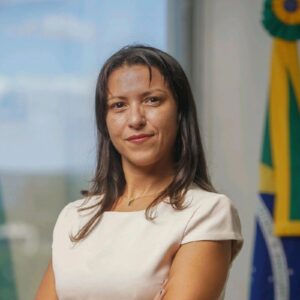
Carina Pimenta is the National Secretary for Bioeconomy at the Ministry of Environment and Climate Change in Brazil, where she is responsible for public policies on bioeconomy, payments for environmental services, genetic resources management, and the shared governance of fisheries resources.
She holds a degree in Business Administration from Fundação Getulio Vargas (FGV-EAESP) and a Master in Social Development from the University of Sussex. Carina has built a career that combines practice, research, and innovation in the socio-environmental field. In 2018, she co-founded the Instituto Conexões Sustentáveis (Conexsus), dedicated to strengthening community-based and impact-driven businesses (https://www.conexsus.org/), and was recognized as a Skoll Foundation Fellow for her work in social innovation (https://skoll.org/).
Earlier in her career, she worked on other environment-related initiatives, for instance serving as Operations Manager at Fundo Vale, where she led strategic investments in climate change initiatives, developed long-term partnerships with civil society organizations, the private sector, and governments, and oversaw more than 50 projects with around 25 partners in the Amazon. In this role, she also contributed to the development of new institutional arrangements between government and civil society and helped create monitoring systems to evaluate results at both institutional and local levels. Her trajectory reflects a consistent commitment to building solutions that connect the global debate on climate change with concrete practices in territories and communities.

Origens Brasil® is a collaborative network that promotes ethical business in conservation areas of the Amazon forest. The initiative brings together Indigenous, quilombolas and other traditional communities, NGOs, and companies, building transparent and traceable commercial relationships that ensure fair trade, product origin and strengthen local economies while safeguarding biodiversity. Through its traceability QR code system, consumers can access the stories behind each product, fostering stronger connections between producers and society.
During the conference, the Origens Brasil® case will serve as an unique case to discuss how systemic collaboration among multiple stakeholders promotes sustainable co-created products, fostering sustainable consumption.
As speakers, the Origens Brasil network will be represented by one of its administrators, alongside a representative of a traditional community and a manager from member companies.